

波纹管阻燃检测方法及标准
波纹管的阻燃性能是其安全性能的重要指标,尤其适用于汽车、建筑、电力等对防火要求较高的领域。以下是常见的阻燃检测方法及依据标准:
阻燃检测需遵循行业或客户指定的标准,常见的有:
UL 94 V0:美国保险商实验室(UL)制定的塑料材料燃烧性能标准,是波纹管阻燃检测的常用标准;
MVSS 302:美国机动车安全标准,适用于汽车内饰及排气系统波纹管的燃烧性能要求;
QC/T 413-2002:中国汽车行业标准,规定了汽车用波纹管的阻燃试验方法(如4.10.2条);
GB/T 2408:中国国家标准《塑料燃烧性能的测定 水平法和垂直法》,部分场景也会参考此标准。
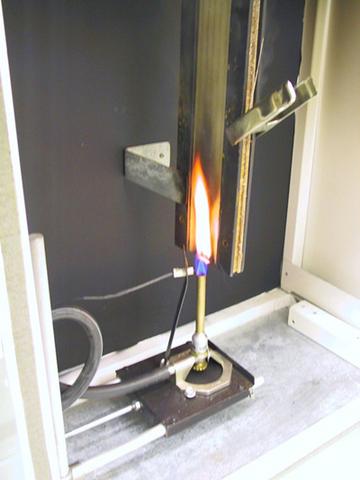
UL 94 V0采用垂直燃烧试验,步骤如下:
试样准备:取长度125mm、宽度13mm、厚度(不超过13mm)的波纹管试样,垂直固定在试验架上;
火焰点燃:使用本生灯(火焰高度125mm,蓝色内焰高度40mm),对准试样顶端10mm处点燃10秒,然后移开火焰;
燃烧时间记录:移开火焰后,记录试样的持续燃烧时间(需≤10秒);
二次点燃:若试样在第一次燃烧后未熄灭,再次用火焰点燃10秒,移开后记录第二次持续燃烧时间(仍需≤10秒);
滴落物检查:试验过程中,试样不得有熔融滴落物引燃下方300mm处的棉花(避免火势蔓延)。
符合UL 94 V0标准的波纹管需满足:
两次点燃后的总燃烧时间≤20秒;
无滴落物引燃棉花;
试样燃烧后未完全烧尽(残留长度≥50mm,或烧至夹具处停止)。
燃烧试验机:用于模拟火焰环境,控制火焰高度、点燃时间等参数;
计时设备:精确记录燃烧时间;
棉花垫:放置在试样下方,检测滴落物的引燃性。
实际检测中,需根据波纹管的应用场景(如汽车、建筑、电力)选择对应标准(如MVSS 302适用于汽车,UL 94 V0适用于通用塑料),并以客户指定的实验方法为准。例如,汽车排气系统波纹管可能额外要求高温下的阻燃性能(如100℃以上环境中的燃烧测试),需结合热老化试验综合评估。
通过上述方法检测,可确保波纹管在火灾场景下的安全性,防止火势扩散。
Flame retardancy testing methods and standards for corrugated pipes
The flame retardancy of corrugated pipes is an important indicator of their safety performance, especially suitable for industries with high fire protection requirements such as automotive, construction, and power. The following are common flame retardancy testing methods and the corresponding standards:
I. Main reference standards
Flame retardancy testing should follow industry - specified or customer - specified standards. Common ones are:
UL 94 V0: A standard for the flammability of plastic materials established by Underwriters Laboratories (UL) in the United States, which is a commonly used standard for the flame retardancy testing of corrugated pipes.
MVSS 302: A motor vehicle safety standard in the United States, applicable to the flammability requirements of corrugated pipes in automotive interiors and exhaust systems.
QC/T 413 - 2002: A standard in the Chinese automotive industry, which stipulates the flame retardancy test methods for automotive corrugated pipes (e.g., Article 4.10.2).
GB/T 2408: A Chinese national standard "Determination of burning behavior of plastics - Horizontal and vertical test methods", which may also be referred to in some scenarios.
II. Specific testing methods (taking UL 94 V0 as an example)
UL 94 V0 uses a vertical burning test, and the steps are as follows:
Sample preparation: Take a corrugated pipe sample with a length of 125mm, a width of 13mm, and a thickness (not exceeding 13mm), and vertically fix it on the test rack.
Flame ignition: Use a Bunsen burner (flame height 125mm, blue inner flame height 40mm) to ignite the sample at a point 10mm from the top for 10 seconds, and then remove the flame.
Combustion time recording: After removing the flame, record the continuous burning time of the sample (which should be ≤ 10 seconds).
Second ignition: If the sample does not go out after the first burning, ignite it again with the flame for 10 seconds. After removing the flame, record the second continuous burning time (which still should be ≤ 10 seconds).
Dripping inspection: During the test, the sample should not have molten drips that can ignite the cotton placed 300mm below (to avoid the spread of fire).
III. Result judgment
Corrugated pipes that meet the UL 94 V0 standard should meet the following requirements:
The total burning time after two ignitions should be ≤ 20 seconds.
There should be no drips that can ignite the cotton.
The sample should not be completely burned out after combustion (the remaining length should be ≥ 50mm, or the burning should stop at the clamp).
IV. Testing instruments
Burning test machine: Used to simulate the flame environment and control parameters such as flame height and ignition time.
Timing device: Used to accurately record the burning time.
Cotton pad: Placed below the sample to detect the ignitability of drips.
Remarks
In actual testing, the corresponding standards should be selected according to the application scenarios of the corrugated pipes (e.g., MVSS 302 for automotive, UL 94 V0 for general plastics), and the experimental methods specified by the customer should be followed. For example, corrugated pipes in automotive exhaust systems may have additional requirements for flame retardancy at high temperatures (such as a burning test in an environment above 100℃), and a comprehensive evaluation should be carried out in combination with thermal aging tests.
Through the above - mentioned testing methods, the safety of corrugated pipes in fire scenarios can be ensured, and the spread of fire can be prevented.
全球服务热线 Global Service Hotline:152-6153-8963
